Local Services Ads for Lawyers: The Complete 2026 Guide
Google Local Services Ads (LSAs) put a law firm’s name, reviews, and a “Google Screened” badge above almost everything else on the results page, and you pay per lead instead of per click. For many practice areas they are the fastest way for a firm to get phone calls from people ready to hire.
This guide covers what LSAs are, how they compare with standard Google Ads (“AdWords”) and SEO, how to set them up step by step, how to budget and manage them, and answers to common questions. If you would rather have a team run it, our law firm PPC agency manages LSAs alongside Google Search campaigns.
What Are Local Services Ads?
Local Services Ads (LSAs) are digital ads in Google’s search engine results pages (SERPs). Unlike standard Google Search ads, LSAs show a business’s information, including its contact number, and a “Google Screened” badge, which means the company has passed verification requirements set by Google. Lawyers local services ads are a great way to get high-converting leads as they only appear to people within the target location of the ad.

Suggested Reading: PPC for Law Firms: How to Stop Wasting Money and Start Getting Cases
Are Google Local Service Ads Worth It: Top Benefits
LSAs have these advantages:
- LSAs typically appear above standard Google Search ads, which means better visibility.
- LSAs show a photo of the lawyer and Google Screened badge, which builds trust and credibility for potential clients.
- LSAs follow a pay-per-lead scheme, so you only pay when a user contacts your firm from the ad.
- LSAs allow users to contact the business directly from the ad, improving conversion rates from qualified leads.
- LSAs only appear for searches with the intent of hiring a service at that very moment. This means LSAs won’t appear for non-transactional search keywords like “what to do after a car accident,” “symptoms of whiplash,” etc.
LSAs vs. Google Search Ads for Lawyers: When to Use Each
Many attorneys searching for “AdWords for lawyers” are really choosing between two products. Here is how they differ in practice:
- How you pay: LSAs charge per lead (a call, message or booking). Google Search ads charge per click, whether or not the visitor contacts you.
- Control: Search ads let you choose keywords, write ad copy, send traffic to a specific landing page and exclude searches you don’t want. LSAs give you almost none of that; Google decides when to show you based on your practice areas, service area and profile.
- Trust signals: LSAs show your reviews and the Google Screened badge. Search ads rely on your copy, extensions and landing page to earn trust.
- Scale: LSA volume is capped by how many nearby people search for your practice area. Search campaigns can scale further across more keywords, locations and case types.
Use LSAs when you’re in an eligible practice area, have solid Google reviews and can answer the phone fast. Add Google Search ads when you need more volume than LSAs deliver, want to target specific case types (for example, truck accidents rather than all personal injury), or want to control the landing page. Most firms that do well with paid search run both, measured on cost per signed case.
Local SEO is the organic counterpart: the same people who see your LSA also see the map pack, so a well-optimized Google Business Profile and a steady flow of reviews help both. See how our law firm SEO agency approaches that side.
How Do LSAs Compare With SEO?
LSAs, while effective in generating quality leads, aren’t necessarily comparable or equivalent to SEO. LSAs are great for driving immediate results, but SEO for lawyers ensures long-term organic traffic to your site.
What’s a Lead With LSAs?
A lead from an LSA can be:
- Phone calls
- Voicemails
- Direct messages
- Missed calls that are called back by the business
- Online bookings/appointments
Leads aren’t charged for:
- Calls outside the specified business hours
- Canceled bookings
- Unanswered follow-up calls
- Inquiries unrelated to the services offered
LSAs vs. Local Search Ads vs. Google Ads
LSA, local search ads, and standard Google ads have similarities and differences.
Out of all these options, only LSAs follow the pay-per-lead pricing model. Google ads and local search ads both use pay-per-click (PPC).
When it comes to ad placement, LSAs appear on top of the search results page, while local search ads appear on Google Maps and local search. Standard Google ads appear on top of organic search results but below LSAs and don’t have the Google Screened badge or “Call” button option.
Only LSAs are verified for business registration.
Here’s a brief comparison table of LSAs, local search ads, and Google ads.
| Feature | LSAs | Local Search Ads | Google Ads |
|---|---|---|---|
| Pricing model | Pay-per-lead | Pay-per-click | Pay-per-click |
| Ad placement | Top of search results | Google Maps/local searches | Search results + other platforms |
| Targeting | Geographic + service-based | Location + keywords | Keywords + advanced options |
| Verification | Required | Not required | Not required |
| Business type | Service-based businesses | Local businesses | All business types |
How To Set Up Local Services Ads
Before setting up LSAs, ensure that you have a Google Business Profile. Once this is done, you can go ahead and sign up for LSAs.
1. Sign Up for Google Local Services Ads
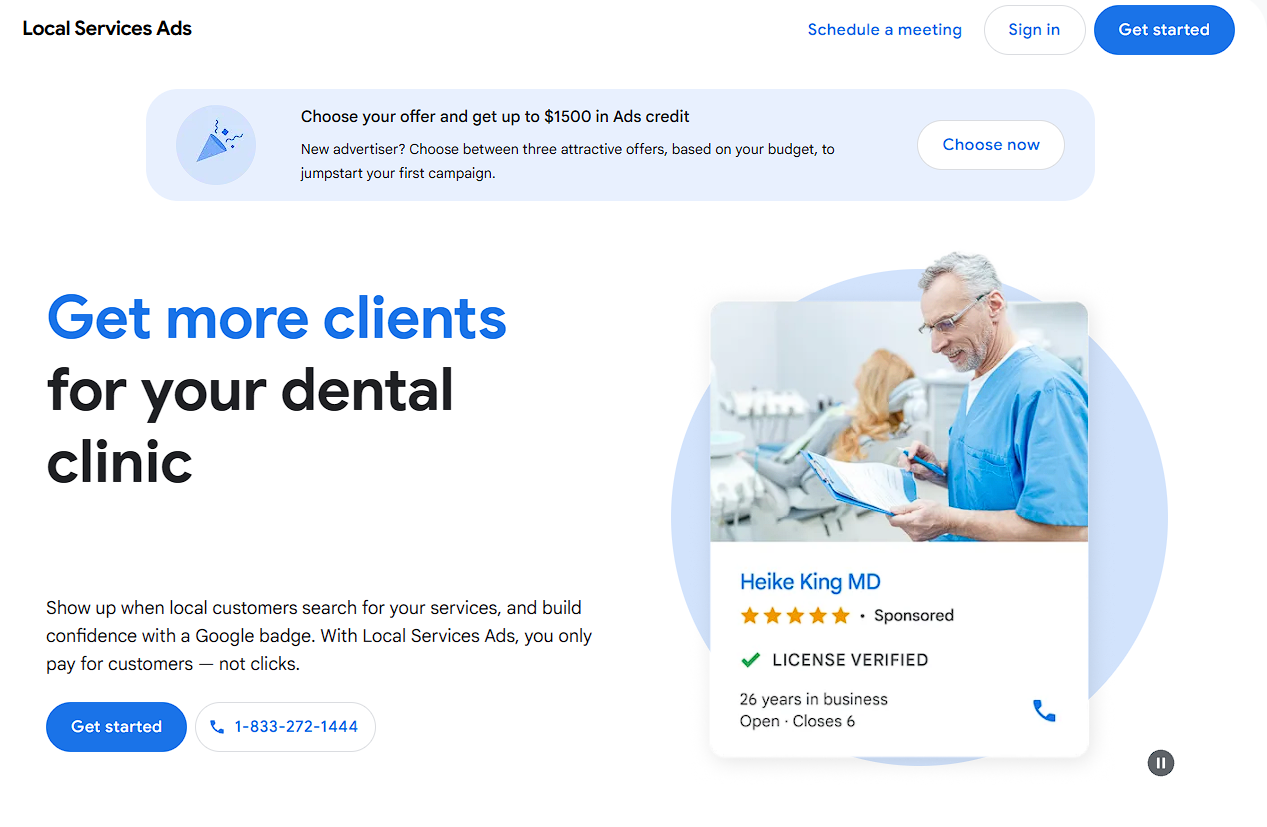
Go to Google’s Local Services Ads page and click Get Started.
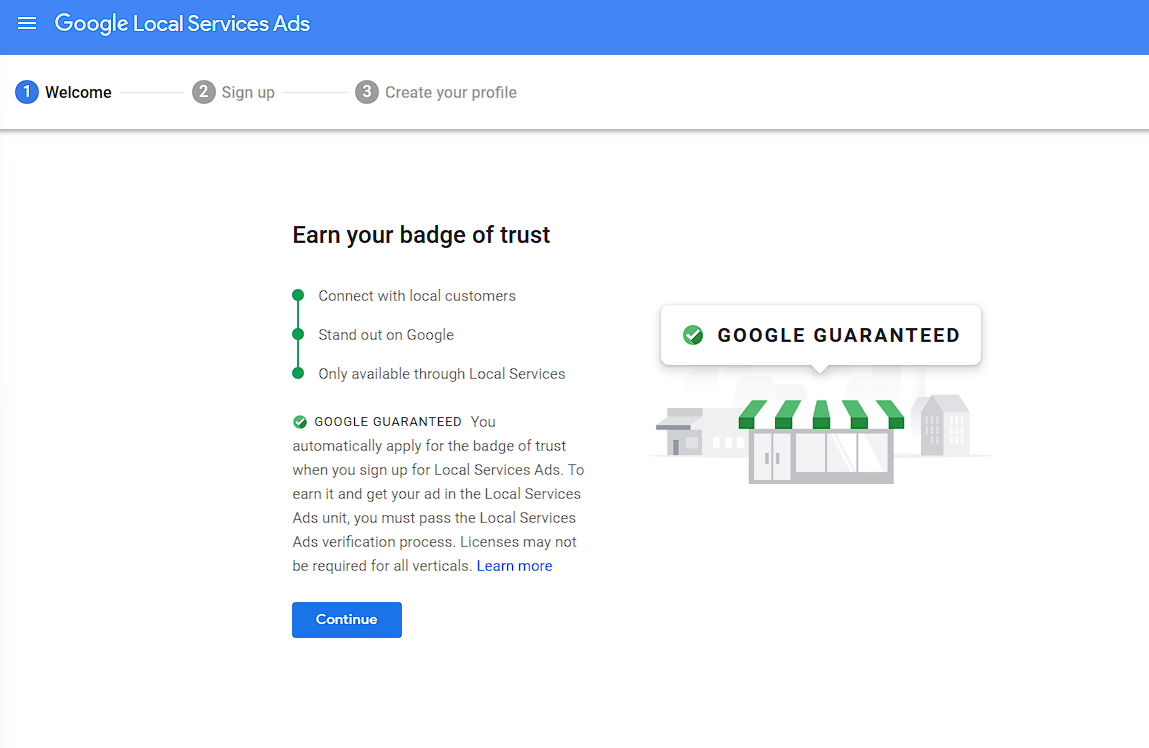
On the next window, click Continue.
2. Enter Your Firm’s Business Information
On the next page, enter this information about your law firm:
- Country
- State
- ZIP code
- Job category (Law)
- Practice areas
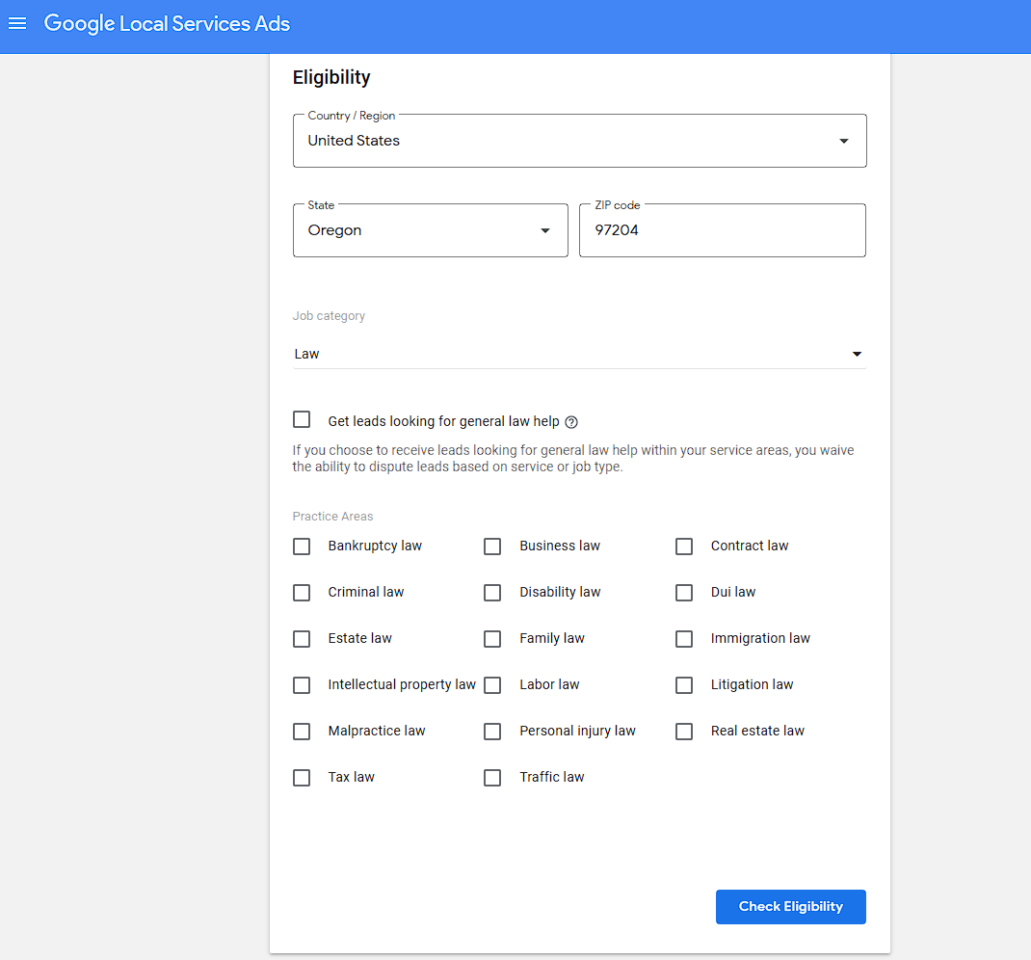
When done, click Check Eligibility.
3. Check Your Eligibility
Next, enter your firm’s details such as business name, phone number, website, and business address. You can also choose email and/or text message for receiving leads. Using case management software can help you organize and respond to these leads efficiently.
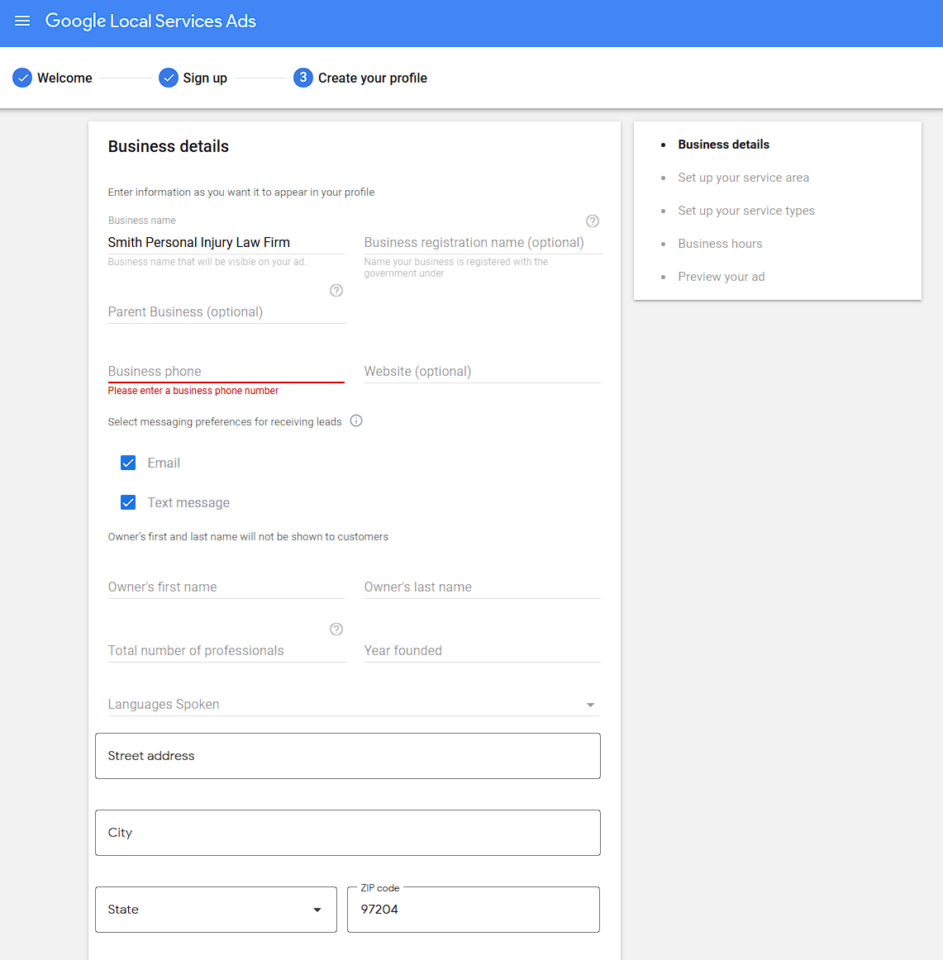
Under the address fields, you need to specify if clients can visit your office.
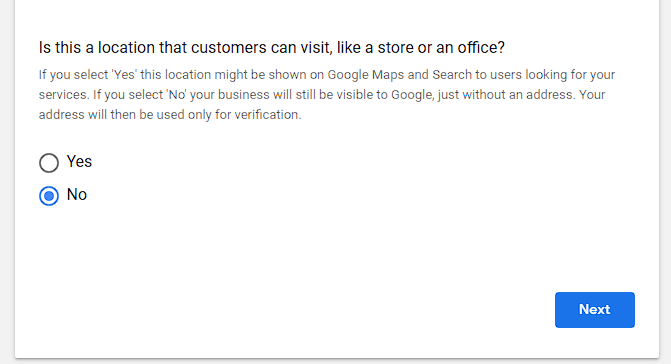
Click No if you don’t have an office, or you work from home and don’t want to disclose your location in the ad.
Click Next to continue.
On the next page, you can add cities that you serve or exclude specific areas that you don’t serve.
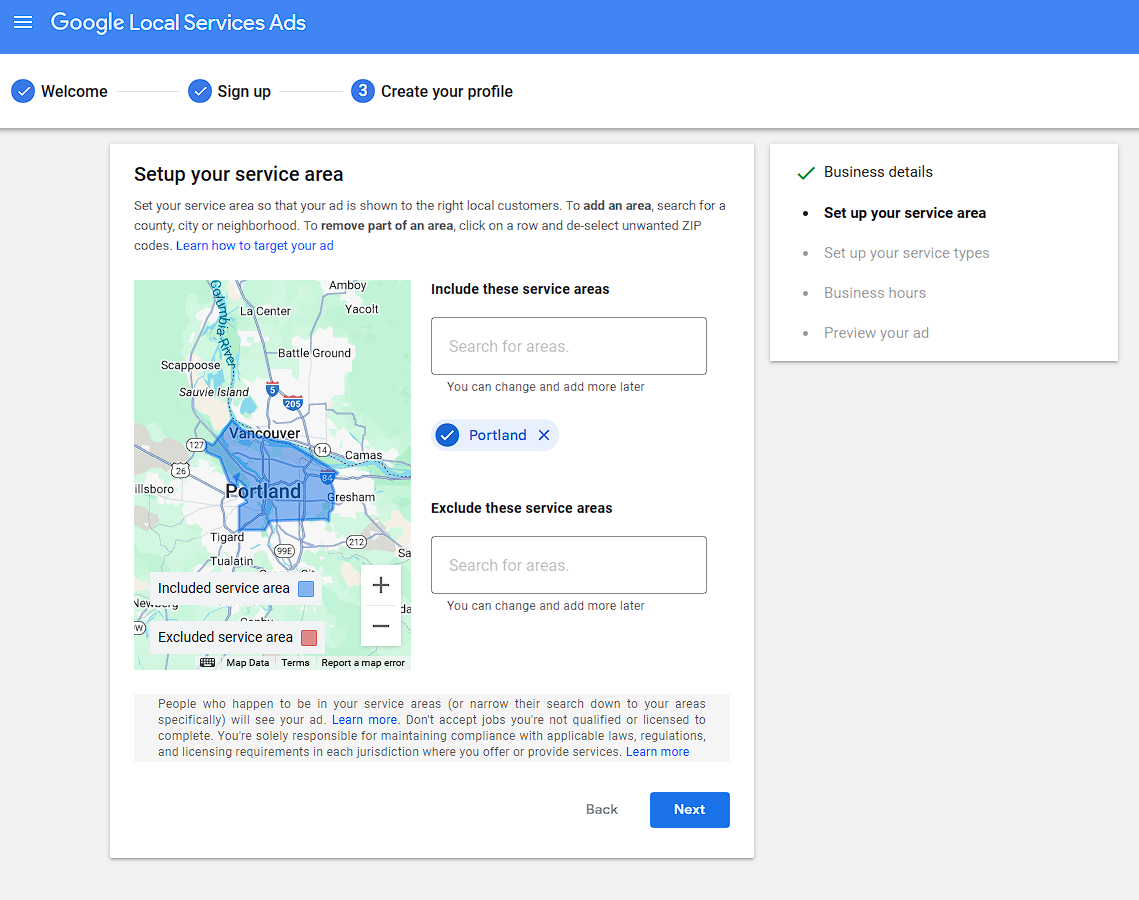
Click Next to continue.
4. Specify Your Services
Select specific services you offer based on the practice area/s you selected earlier:
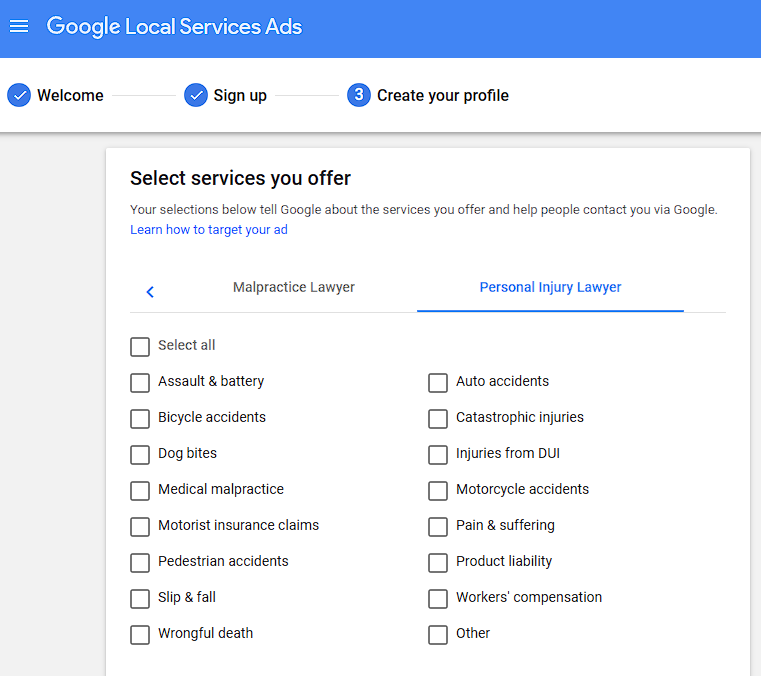
Tick the box next to I agree to acknowledge the license verification requirement. Click Next.
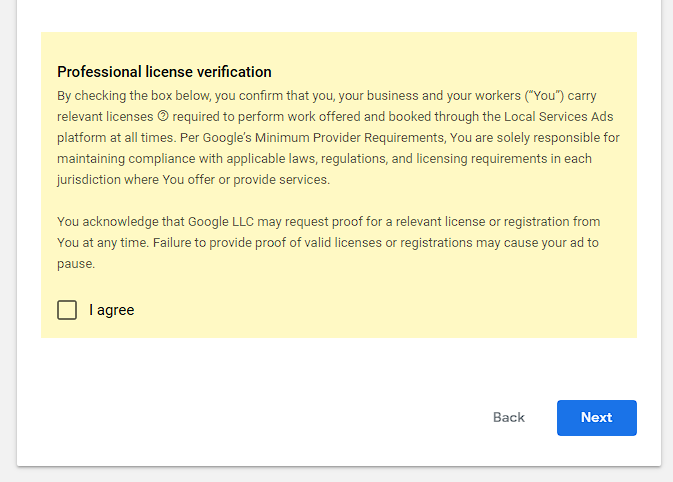
5. Set Your Business Hours
Specify the business hours of your practice on the next page:
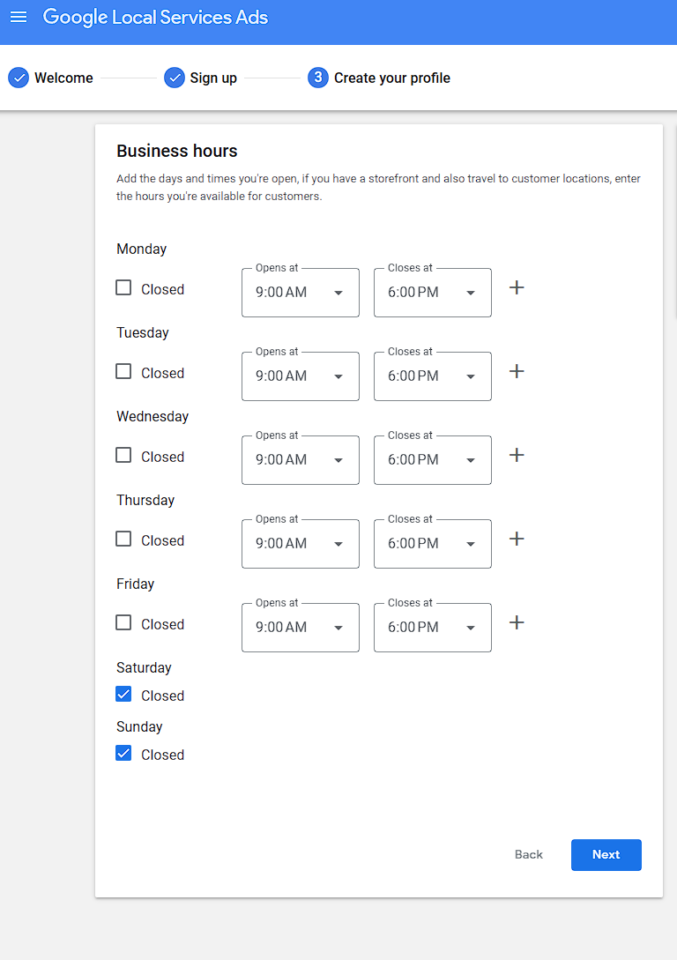
Click Next when done.
6. Preview Your Ad
You’ll be shown an example of what your ad may appear based on the information you entered.
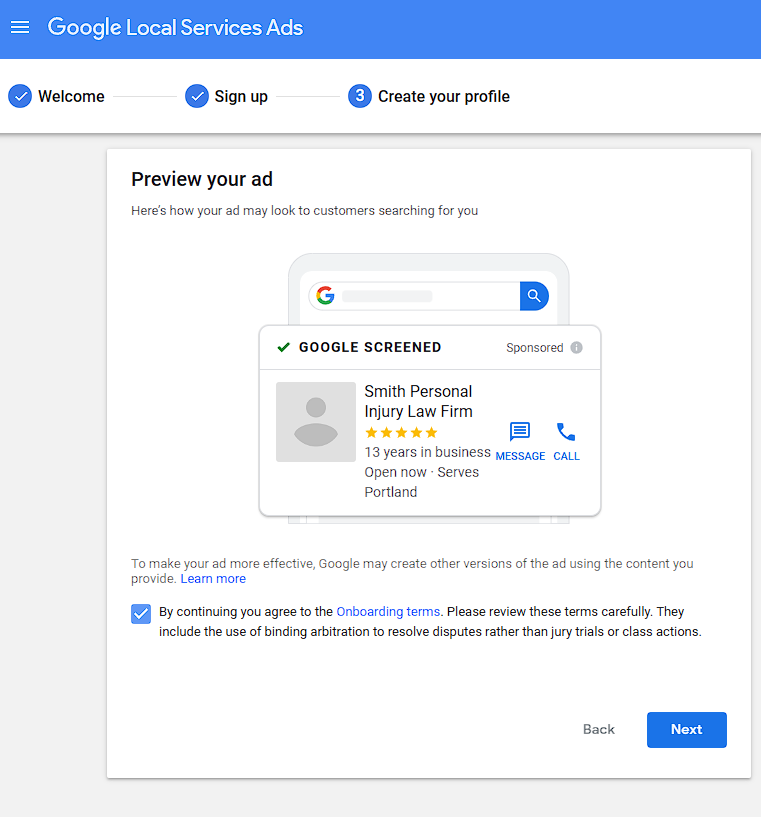
Tick the box to agree to the Onboarding terms and click Next.
7. Business Verification
A pop-up box appears to show you the number and email address to be used in routing calls from leads.
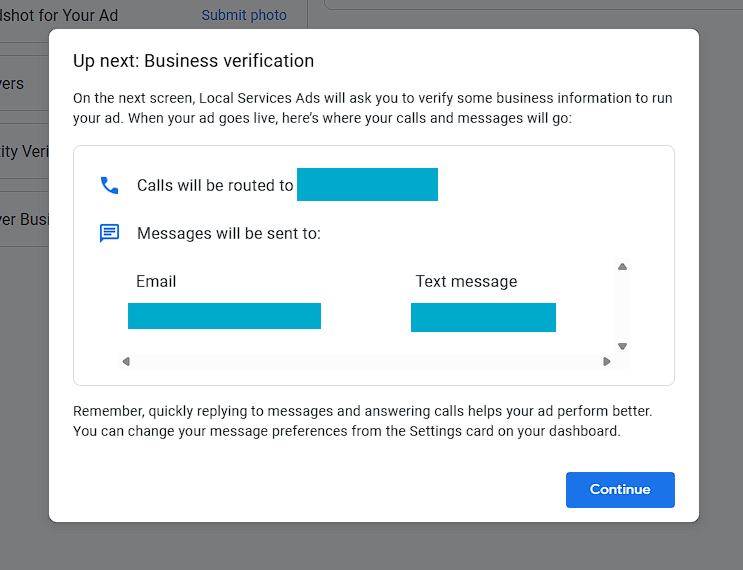
Check that the information is correct and click Continue.
This next section will guide you through completing the business verification for your firm.
8. Add Your Billing Information
The first section under the Business Verification page is for entering your billing information. Enter your payment details and click Submit.
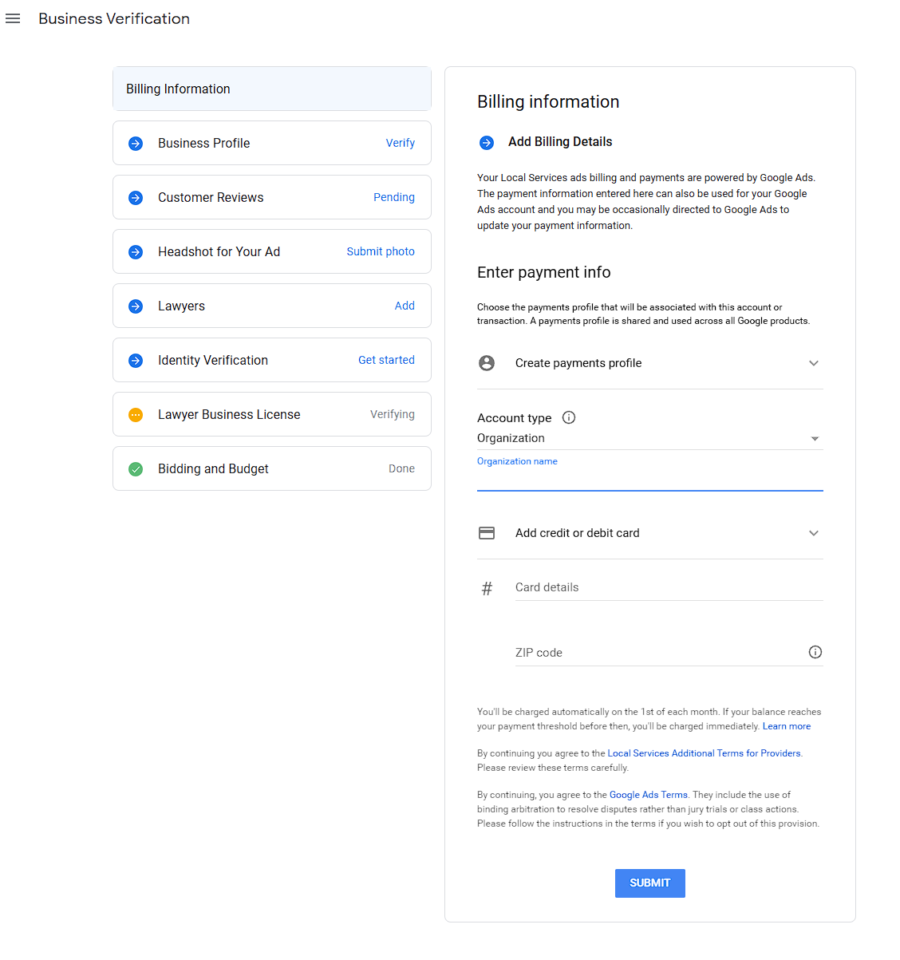
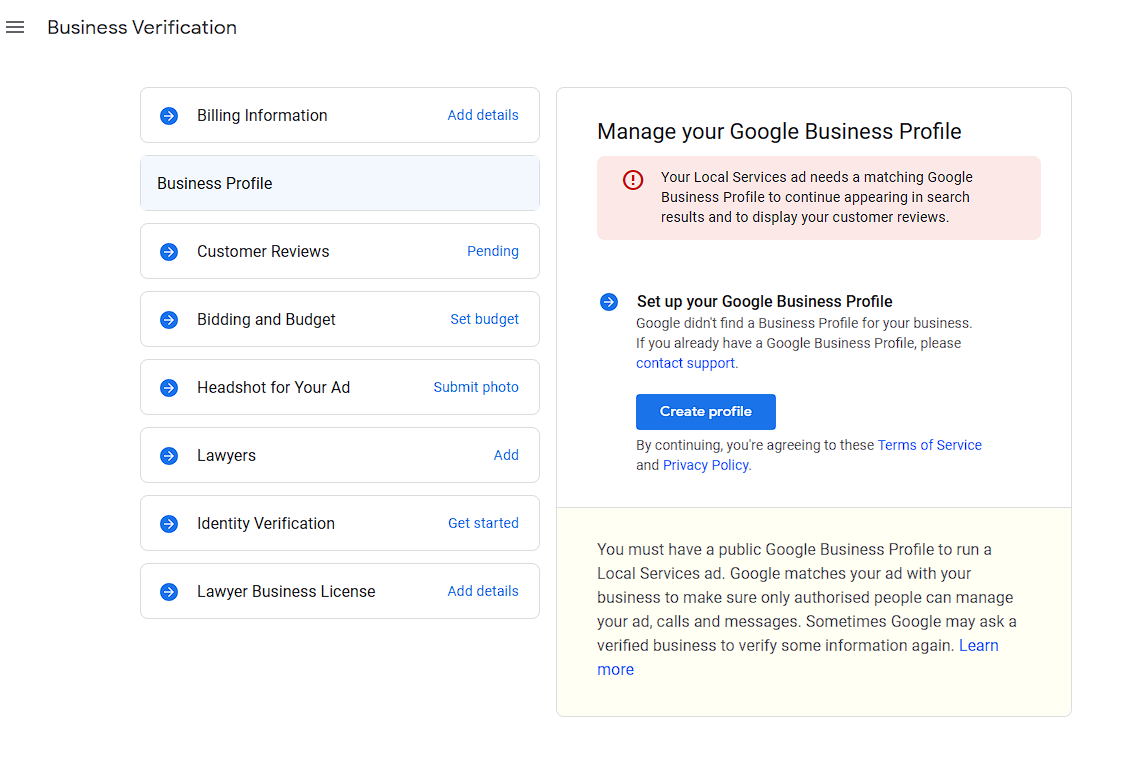
9. Connect Your Google Business Profile
If you haven’t created a GBP yet, you can click Business Profile from this page and click Create profile.
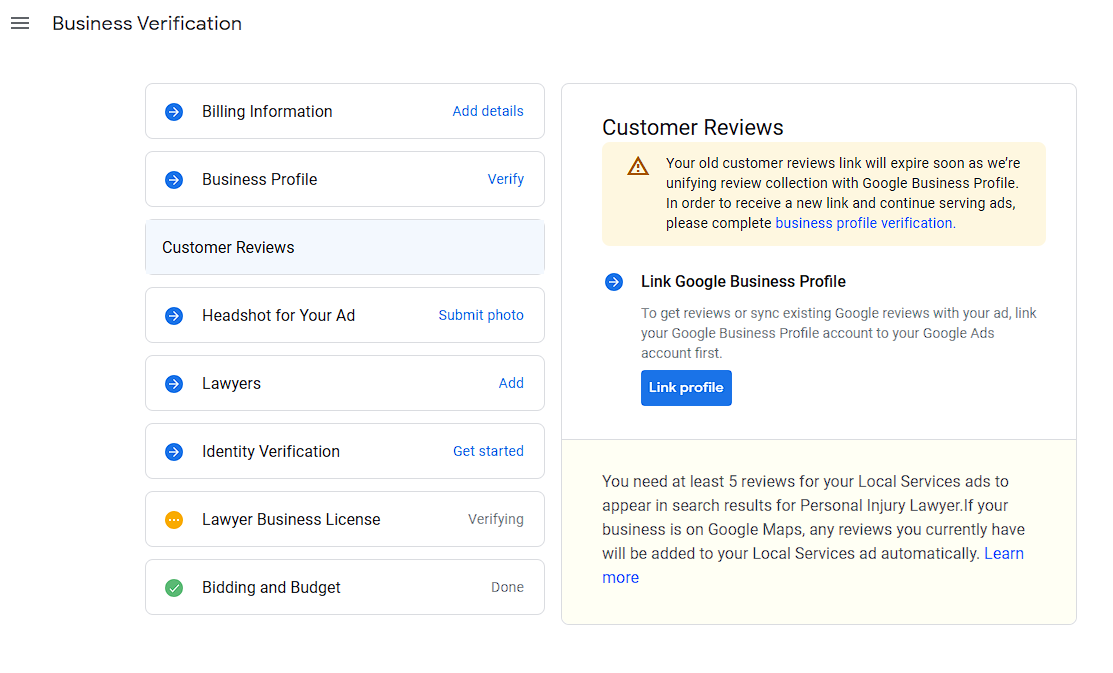
10. Import Your Existing Reviews
If you have a Google Business Profile, you can click Link profile to sync existing Google reviews with your ad.
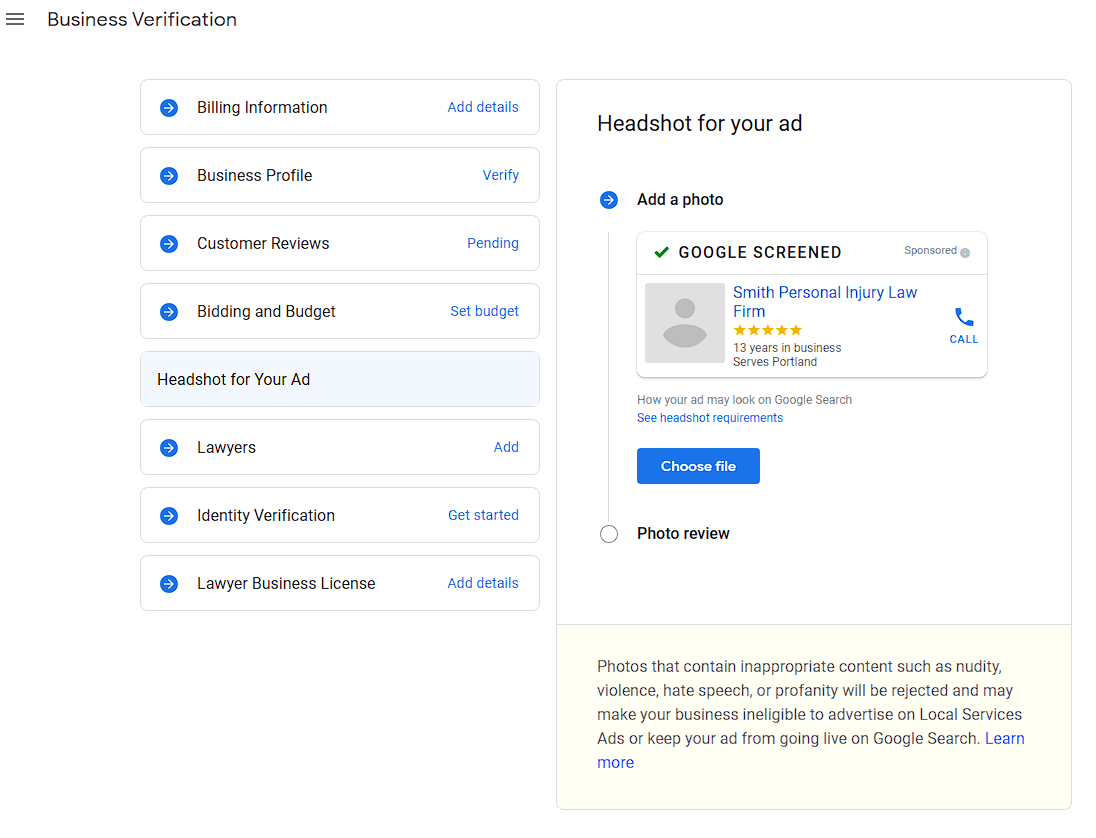
11. Add Your Photo/Headshot
Click Headshot for Your Ad, then click Choose file to add a professional photo that shows up in the LSAs.
12. Set Your Budget
You can select a budget option when you click Bidding and Budget. You can use automated bidding or manual bidding.
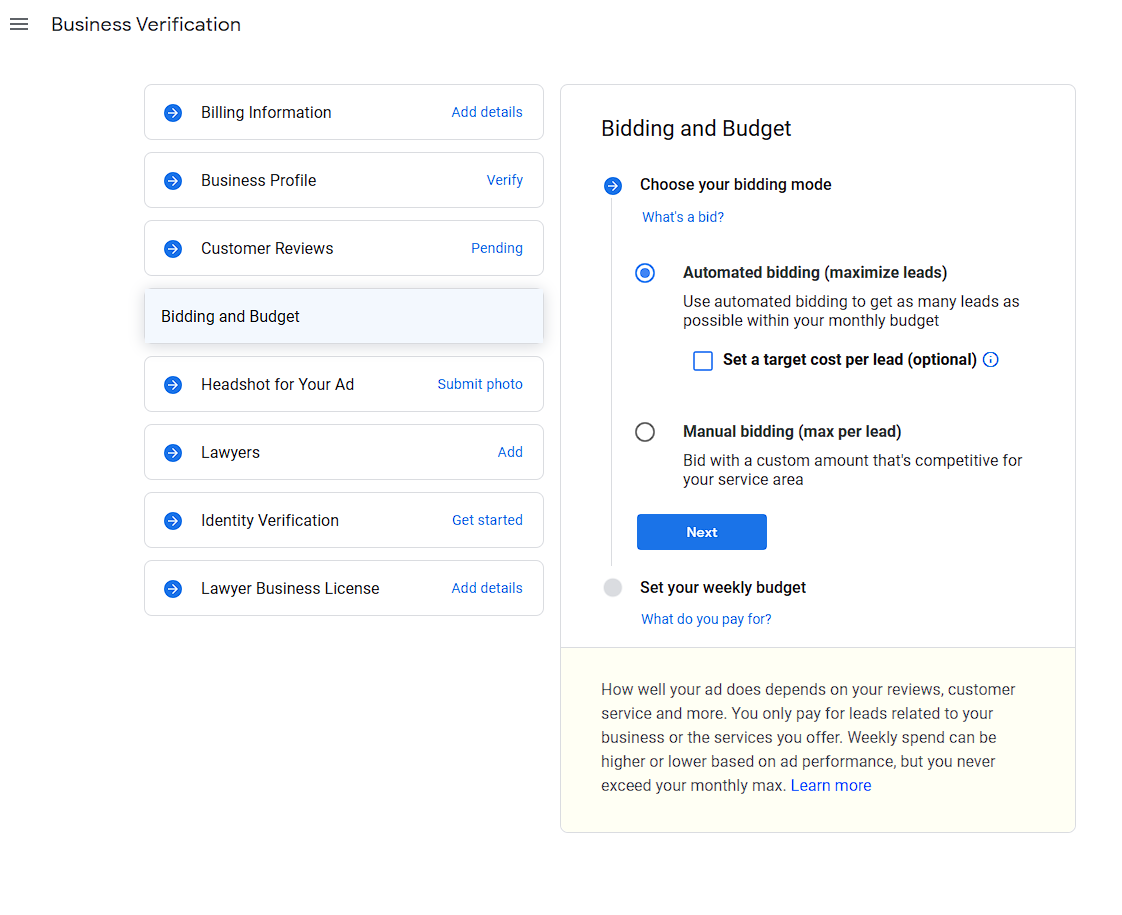
Click Next to set your weekly budget. Again, you can accept the suggested amount or manually set your budget.
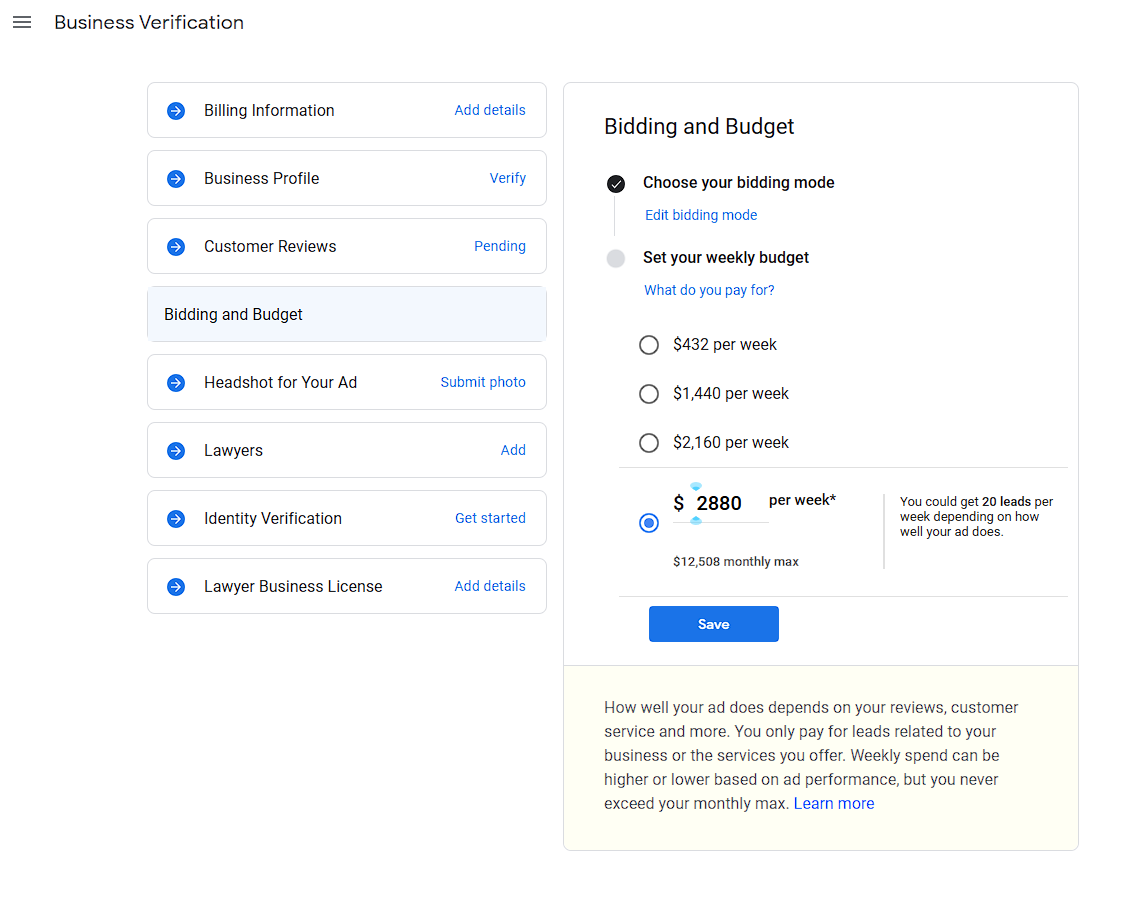
Click Save.
13. Add Lawyers to Your Profile
If you have partners in your practice, you can add their names here:
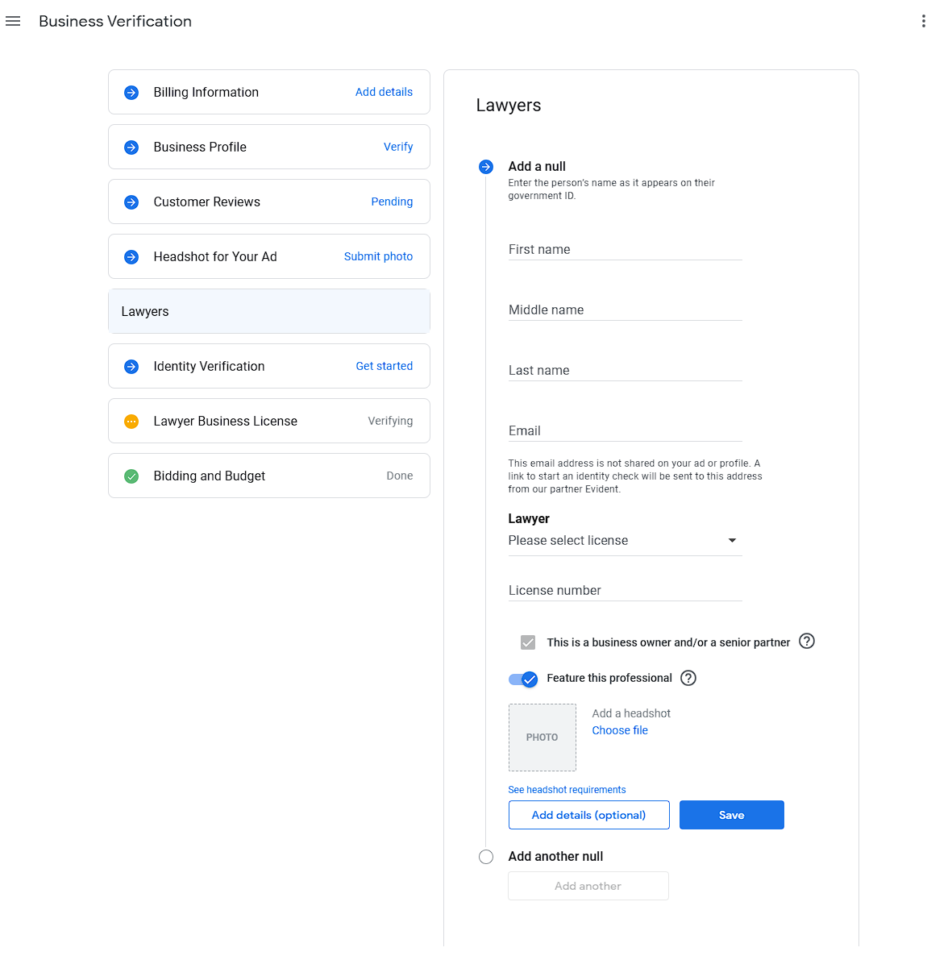
You’ll need the lawyer’s license number and headshot to complete this page.
14. Add Your Business License
In this section, you’ll be asked to enter your business license.
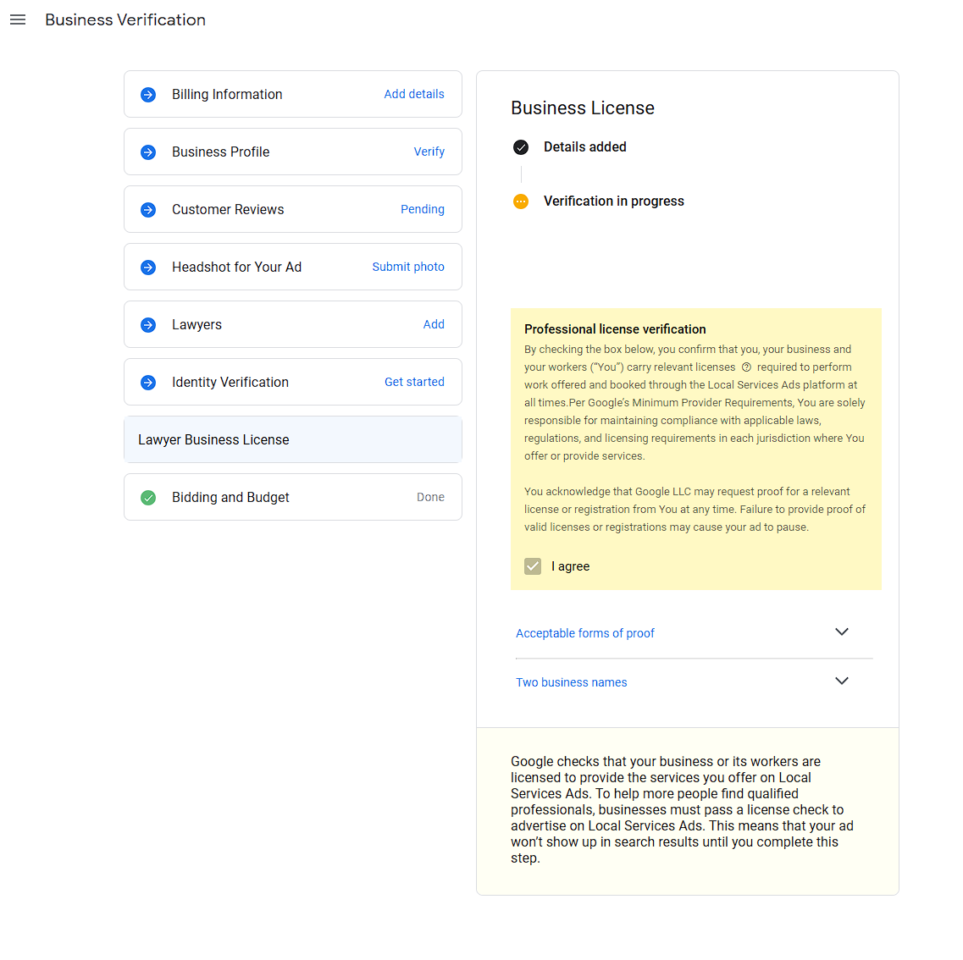
Note that business licenses should show your business name and expiration date.
15. Wait for Verification
After entering all the required information, you’ll need to wait a few days for Google to verify your business.
16. Create Your Ads
Once your LSA is verified and activated, you can start creating your ads. Some best practices for your ads to stand out include:
- Highlighting specific legal services you offer (car accident attorney, medical malpractice lawyer, etc.)
- Using professionally shot photos
- Responding promptly to all reviews
- Writing a compelling business description emphasizing your firm’s unique selling proposition (USP)
- Defining your service areas to improve the quality of your leads
17. Monitor Your Ad’s Performance
You can check how your LSAs are performing using the Lead Inbox and Reports section of your LSA dashboard.
Take note of the lead quality vs. quantity. It’s important to see if leads are converting into bookings. If this isn’t the case, you may need to refine your service areas, revise your ad content, or revamp your strategy altogether.
Check your return on ad spend (ROAS) by comparing the fee revenue from cases signed through LSA leads with what you spent. Because legal cases take time to resolve, also track cost per signed case, which you can measure much sooner.
LSA Budget Setting and Management
To help you manage your ad spend, you need to understand how the pay-per-lead model works and how choosing a bidding type affects your budget.
Your budget will depend on your goals. First, you’ll need to come up with a target number of leads per week and the cost per lead (CPL). Lead prices vary a lot by practice area and market; competitive areas such as personal injury usually cost more per lead than lower-competition areas. Google shows a suggested budget and lead estimates for your area during setup, which is the most reliable starting point.
Leads from phone calls cost more than message leads so that also factors into the overall cost of LSAs.
You can choose manual bidding so you can set a specific amount to pay for leads and avoid going over your ad budget. Based on the number of leads you want to get, you can calculate how much it will cost you for a week and set this as your weekly budget.
Invalid Leads and Lead Credits
Google now handles invalid leads through automated lead crediting rather than individual disputes. It uses machine learning to screen leads (some poor-quality leads are never charged) and keeps re-assessing charged leads; credits for leads later judged invalid are typically applied within 30 days, though the original charge still shows on your invoice. Google also no longer credits “job type not serviced” or “geo not serviced” leads, so keep your practice areas and service area accurate.
You can still give feedback on every lead with Rate this lead in your LSA account. Rating leads consistently helps Google learn which leads are relevant to your firm.
Local Services Ads FAQs
How Does Google Rank Local Services Ads?
According to Google’s documentation, LSA ranking depends on your bid and how likely you are to receive a lead, based on:
- Your bid. The maximum you are willing to pay for a lead (you may pay less).
- Responsiveness. How quickly and reliably you answer calls and messages.
- Search context. The service searched for, the time of the search and the searcher’s location.
- Relevance. How well your practice areas and profile match the search.
- Profile quality. Your reviews and rating, response time, photos and verification status.
How Much Do Local Services Ads Cost For Lawyers?
There is no fixed price. You set a bid (or let Google bid automatically) and a weekly budget, and you pay per valid lead. Cost per lead depends on your practice area, market and competition, and competitive areas like personal injury typically cost the most. Use the budget and lead estimates Google shows during setup for your location.
Will My Ads Appear More If I Set A Higher Budget?
A higher budget doesn’t rank your ads higher, but it keeps the ad active longer. This means that if your budget is too low, the ad might stop running because it has reached its visibility limit.
Do Keywords Work in Local Services Ads?
No, keywords don’t work in LSAs. Unlike Google ads, LSAs don’t need to have keywords to rank in Google search results because ads are triggered from a user’s location-based search query.
Does My Practice Area Qualify for Local Services Ads?
In the US, legal LSAs have covered the practice areas below. Availability can vary by location and Google adds or changes categories over time, so confirm with Google’s eligibility check during sign-up:
- Bankruptcy Law
- Business Law
- Contract Law
- Criminal Defense Law
- Disability Law
- DUI Law
- Estate Law
- Family Law
- Immigration Law
- Intellectual Property Law
- Labor Law
- Litigation Law
- Malpractice Law
- Personal Injury Law
- Real Estate Law
- Tax Law
- Traffic Law
How Do I Know If My LSAs Are Working?
Track key LSA metrics like lead count, total amount charged, and ROAS to assess if your ads are hitting your goals. Access the reports section in your LSA dashboard to view, analyze, and improve your ads’ performance.
Can I run Local Services Ads for my family law or criminal defense firm?
Yes. Family law, criminal defense and DUI are among the legal categories LSAs support. In these practice areas, responsiveness matters even more: people often call several firms, so answering quickly affects both your ranking and whether you sign the client.
Should I use an agency for Local Services Ads?
You can run LSAs yourself, and small single-location firms often do. Consider help when you have multiple locations or practice areas, when lead quality is inconsistent, or when you also run Google Search ads and want one strategy and one set of reporting across both.
Managing LSAs: In-House vs. Agency
LSAs look simple, but the results depend on day-to-day management:
- Answering or returning every lead quickly, and rating leads so Google learns what is relevant
- Keeping practice areas, service areas and business hours accurate so you are not paying for leads you can’t take
- Building a steady flow of genuine Google reviews
- Adjusting bids and weekly budget based on cost per signed case, not just lead count
- Coordinating LSAs with Google Search campaigns so the two don’t compete for the same searches without a plan
If your team can own those tasks, in-house management works. If not, a law firm PPC agency can run LSAs and Search ads together; see our Nunez Law PPC case study for how we approach paid campaigns for injury firms.
Start Your Local Services Ads Campaign Today With On The Map Marketing!
It takes some time to learn and master LSAs for lawyers and generate high-quality leads. In most cases, it can be a cycle of trial and error.
To avoid making costly mistakes in running LSAs, you can hire digital marketing experts with proven experience in running successful law firm ads.
On The Map Marketing is a law firm digital marketing agency that manages paid search, LSAs and SEO for attorneys as one strategy, measured on the cases they bring in.
Ready to start your firm’s LSA journey?
Contact us for a free review of your LSA and Google Ads setup.
Table of Contents
Related Articles

Dominate Your Market with Digital Marketing Services That Deliver
Talk to a certified professional today, and we will design a strategy specific to your case.