Family Law Digital Marketing: 14 Strategies for 2026
Family law digital marketing is different from marketing most practice areas. People searching for a divorce, custody or support lawyer are often stressed, cautious and comparing several firms at once, so the firms that win are the ones that are easy to find, easy to trust and easy to contact.
This guide covers 14 family law marketing strategies, grouped the way most firms should roll them out: the foundations (Google Business Profile, directories, website, SEO, social), the channels that produce leads quickly (Google Ads, social ads, Local Services Ads, bought leads), and the work that compounds over time (branding, content, reviews, advanced SEO). It ends with how to measure it all and answers to common questions.
To get a tailored marketing strategy made specifically for your family law firm, contact us for a free marketing audit.
Why Do Family Law Attorneys Need a Nuanced Digital Marketing Strategy?
You require a nuanced digital marketing strategy because of the sensitive nature of legal processes involved in the law cases you handle.
Your clients don’t just need legal assistance. They require emotional support too. So, you need to have empathy in your message. To do this effectively, you must consider your client’s emotional and mental state while creating their marketing persona.
With such a tailored strategy, you can connect with your prospective clients on a deeper level and build trust with them eventually, which is vital for family law cases.
Getting Started with Digital Marketing for Your Family Law Firm
Let’s understand what you need to approach to take for your family law marketing.
1. Set up Your Google Business Profile
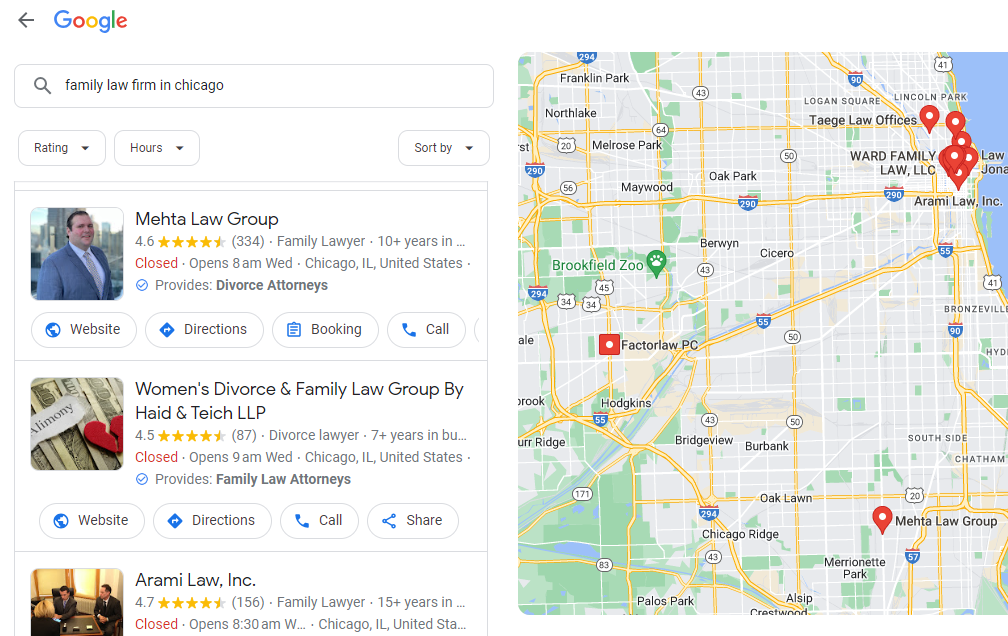
Google is the first place your prospects will look for a family or divorce lawyer when they need one.
To get started, claim your Google Business Profile (earlier called Google My Business) and fill up all the required details, including NAP, website, and hours.
But to get results out of it:
- Make sure every single information you mention here matches with what you have on your website; if something changes — update it.
- Add a full description of your law firm — add keywords here naturally.
- List all your practice areas with a sub-description where required in the Services section — these are also the keywords you want to be found for.
- Share updates regularly, if not daily — you can also add links here and get people to contact you or at least visit your website.
- Have a system to collect as many testimonials and ratings as you can.
- To enhance your audience’s trust, respond to all or at least the maximum reviews you can — both positive and negative. Along with asking for reviews, consider asking for referrals as well. They’re not dead.
2. Get on Important Law Firm Directories

Listing your law firm on prominent legal directories can enhance your online presence even more with more reviews, heightened recognition, improved reputation, and valuable backlinks.
But even though there’s nothing wrong with claiming all your free lawyer directory listings, for the paid ones that also require your time investment, consider evaluating their offering. Some essentials to consider are their monthly traffic, trustworthiness, and features that attract new clients (like enabling clients to leave reviews and you to answer legal issues or add content).
Here are some of the good law firm directories that you can consider: Avvo, Super Lawyers, FindLaw, and Lawyer.com.
3. Building a High-Performance Family Law Website

A high-performance family law website is a marketing tool. Your goal should be to:
- Have a secure site with a good website design
- Optimized it SEO,
- Ensure it loads quickly and is mobile responsive
- Easy to navigate,
- answers your visitors’ queries
And provides an overall great user experience, thereby nudging your prospects to take action — contact you or book a consultation call with you.
The easier you make it for your audience to get the right information and take action, the more leads you can expect. Or else you’ll lose them to the competitors who do so.
Here are some tools that you can use to check your website performance:
- Website Grader is powered by Google’s Lighthouse tool. It can help you check your website’s overall performance.
- PageSpeed Insights can help you check your website’s speed.
- Pulsetic can help you check your site’s maintenance and other reports.
- GTmetrix can help you get the overall brief summary and suggestions for your website performance.
- WebPageTest can help you run detailed load-time tests from different locations and devices.
Here are some top family law websites you can take inspiration from to design yours.
4. Optimize Your Law Firm Website for SEO
The first goal of your legal website is to be found when someone searches for a family lawyer. So, you need to optimize your family law site for search engines. The three major Search Engine Optimization techniques you need to use are:
On-Page SEO: Craft top-tier, keyword-packed, high-quality content that ensures your site aligns perfectly with the specific legal terms your target audience searches for — like “divorce attorney, family law attorney, family law firm, and more.”
Off-Page SEO: Build backlinks for your website on other platforms, establish a robust local online presence, and eventually elevate your website’s authority, which is both a major ranking factor for Google and a trust factor for your potential customers.
Technical SEO: Improve user experience and simplify Google’s journey through your site. You can achieve it with an SEO-friendly structure, obliterating duplicate content, and making your site a search engine favorite.
5. Get on Top Social Media Platforms
Using social media marketing for your law firm can reel in leads for you even without a massive budget. Many law firms do it, and Google has mentioned that though social media “doesn’t help you rank by itself” in the organic search — it can still benefit you indirectly in terms of prominence.
Here’s how different family law firms use their social platforms.
Family Law San Diego posts regularly on Facebook.


Lawyer Kelli creates short reels answering common questions and keeps FAQs pinned as story highlights.

Ryan Kalamaya posts regularly on LinkedIn, which suits referral-driven and high-net-worth divorce work.

Ways to Get More Leads Instantly For Your Family Law Practice
While certain aspects of internet marketing yield long-term results, they often require a substantial amount of time to achieve success.
So, you employ alternative digital marketing methods that can deliver rapid results and even augment the outcomes from your time-intensive digital strategies.
6. Run Google Ads
It’s a fast track to leads as it can directly connect with prospects seeking legal help.

But it’s not a stroll in the park either, and the costs can spiral real quick. To make your Google Ads campaign a hit, you need tight keyword targeting (for example “child custody lawyer [city]” rather than broad terms like “divorce”), negative keywords to filter out people looking for free forms or DIY divorce, dedicated landing pages for each practice area, and call tracking so you can see which keywords turn into consultations.
Now, you have two options: either roll up your sleeves and learn the necessary expertise or bring in a law firm PPC agency to manage your campaigns effectively.
7. Try Pay Per Click Social Media Ads
Just like Google ads, social media platforms also offer PPC ads. You bid on the right keywords, demographics, interests, and behaviors to target your audience. And you only pay when your ads generate some specific action — a like or a click.
But when you consider social media advertising, start with just one platform and ensure you’ve already established a strong presence with quality content on that specific channel. This is important because although potential clients may not immediately schedule a consultation through a social media ad, they might visit your social page.
In such cases, having a well-curated profile featuring important information about your firm, like operating hours, website, address, and other pertinent details, can encourage them to follow and engage with your content.
8. Experiment With Local Service Ads
These ads are a little different than your regular Pay Per Click ones. Instead of paying for every click, you pay for each lead (a call, message or booking) related to the services you offer, and verified firms show a “Google Screened” badge. Family law is one of the legal categories Google supports. Our guide to Local Services Ads for lawyers walks through setup step by step.
But they’re only accessible in specific regions, and the US is one of them. Still, you’ll need to verify your location and other details to check your eligibility. Google implements a rigorous screening process for it.

But that’s done to ensure quality to the end user, who may eventually hire you for their case.
Google doesn’t publish a fixed price per lead. What you pay depends on your practice area, your market and your bid, so start with a modest weekly budget, rate every lead in the dashboard, and compare cost per signed client against your other channels before scaling.
9. Buy Family Leads From Vendors
This is a swift solution for lead generation, but you can’t rely on it forever, not a sustainable long-term strategy. Yet, it’s a good idea for times when business is a bit slow.
Nolo, FindLaw and Lawyers.com are among the better-known sources of paid family law leads. Pricing varies widely by market and exclusivity, so before you buy divorce attorney leads, ask whether each lead is exclusive or shared, how it was generated, and what the refund policy is for bad leads. Also check your state’s version of ABA Model Rule 7.2, which generally bars paying anyone for recommending your services, apart from permitted costs like advertising and qualified referral services.
10. Track Calls, Forms and Cost per Signed Case
Fast channels only pay off if you know which ones produce signed clients. Before you scale any of them, set up the basics:
- Call tracking numbers per channel (Google Ads, LSAs, Google Business Profile, website), because most family law leads still call.
- Form and call conversions recorded in Google Analytics and Google Ads, so campaigns optimize toward real inquiries, not clicks.
- An intake log or CRM that notes the source of every consultation and whether it became a retained case.
- A monthly review of cost per lead and cost per signed case for each channel, then move budget toward the winners.
Scale Online Marketing Efforts and Get Even MORE Family Law Clients
So far, we’ve discussed both long-term and quick lead generation options. Along with them, it’s also essential to invest in marketing strategies that enhance the effectiveness of your current marketing initiatives.
These strategies are designed to optimize your existing efforts and maximize results.
11. Make Your Law Firm’s Branding Consistent
A robust brand shows your prospects why they should choose your firm instead of your competitors by highlighting your unique qualities and core values.
Your brand identity, including logos, colors, and fonts, aligns with your “why” and values, creating a cohesive image.
To succeed at it, pinpoint your target audience, construct client personas, and establish a clear mission and vision while upholding authenticity, consistency, and trustworthiness. You’ll also need to have a well-defined brand voice, visual elements, and patient persistence to build your brand recognition over time.
12. Start Publishing Blog Posts Consistently
Content marketing not only builds trust but also enhances your on-page SEO game.
By publishing consistent content, you can target keywords that your dream clients would search for, like adoption, guardianship, postnuptial agreement, domestic violence, restraining orders, child support, child custody, etc.
Good content for marketing family law follows the client’s journey rather than your practice-area list:
- Before filing: “how to prepare for a divorce in [state]”, “how is child custody decided”, “what does a divorce cost”.
- During the case: explainers on mediation, temporary orders, parenting plans and property division.
- After the case: modifying support or custody, relocating with children, enforcing an order.
Write in plain language, answer the question in the first paragraph, and state-specific details matter because family law varies by state. Keep every piece consistent with your state’s lawyer advertising rules.
13. Get More Client Reviews and Improve Your Local SEO
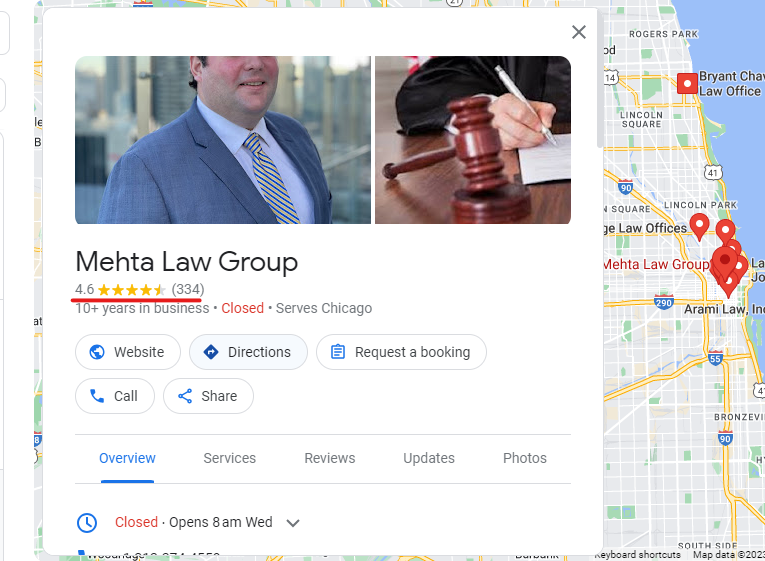
You know online reviews are important. But do you know how important they are?
Reviews are one of the few signals a nervous prospect can use to judge you before calling, and Google lists prominence, which includes review count and rating, as a local ranking factor.
So, have a system in place to ask every satisfied client for a review, on your Google Business Profile and on the legal directories you use, and respond to reviews professionally without revealing confidential details. Keep it within Google’s review policy: don’t offer incentives, and don’t ask only the clients you expect to be happy.
14. Try Advanced SEO Strategies
Some of the best SEO strategies that you can try to get amazing results are:
- Create the type of content that not only delivers value and information but a great experience. So, the next time they want to understand something complex, they think of you or visit your website even if it’s not at the top of search engine results.
- Improve internal linking and fix the broken links for better SEO structure. It helps Google crawl your website easily and increase your web visitors’ dwell time.
- Invest in building backlinks.
- Have separate practice area pages. It helps you target all the required keywords.
Hire a Digital Marketing Agency
When you tie all strategies together – social media, PPC ads, and SEO, you’ll see long-term rewards, such as increased customer trust, authentic engagement, and a steady stream of new clients.
But if you simply don’t have the kind of time to learn everything from scratch and then experiment with these marketing techniques, hire a law firm digital marketing agency. Look for one that can show family law results, reports on leads and signed cases (not just traffic), and can run law firm SEO and Google Ads management together so the channels support each other.
They’ll not only provide you with good returns and grow your business while you pay attention to providing great legal services — but also save you from losing time and money in the process.
Frequently Asked Questions
What is family law digital marketing?
It’s the mix of online channels a family law firm uses to get found and contacted: a Google Business Profile, a fast website with practice-area pages, SEO, helpful content, reviews, and paid channels like Google Ads and Local Services Ads. The goal is signed divorce, custody and support cases, not just traffic.
What is the best marketing for a family law firm?
For most firms the foundation is a complete Google Business Profile, steady reviews and a website with a dedicated page for each service (divorce, custody, support, adoption). Google Ads or Local Services Ads add leads quickly while family law SEO builds up over time.
How long does SEO take for a family law firm?
It usually takes several months to see meaningful movement, and longer in competitive metro markets. That’s why many firms run paid search at the same time and reduce it as organic leads grow.
Should family lawyers buy leads?
Bought leads can fill gaps when things are slow, but they’re usually shared, vary in quality and don’t build long-term visibility. Check exclusivity and refund terms, and your state’s rules on paying for referrals, before you buy.
On The Map Marketing is a team of law firm marketing experts that would love to help! Contact us today for a free custom audit of your family law firm’s online presence, and how our marketing services can help you grow it.
Table of Contents
Related Articles

Dominate Your Market with Digital Marketing Services That Deliver
Talk to a certified professional today, and we will design a strategy specific to your case.